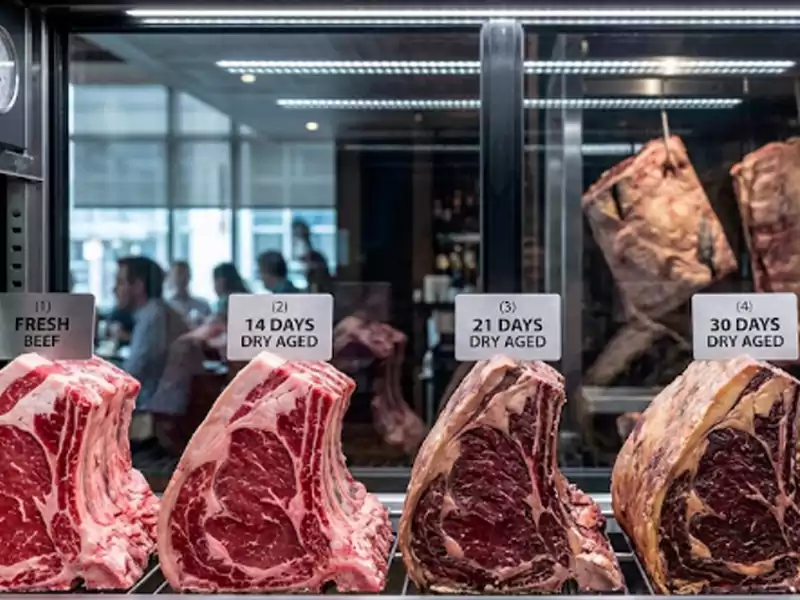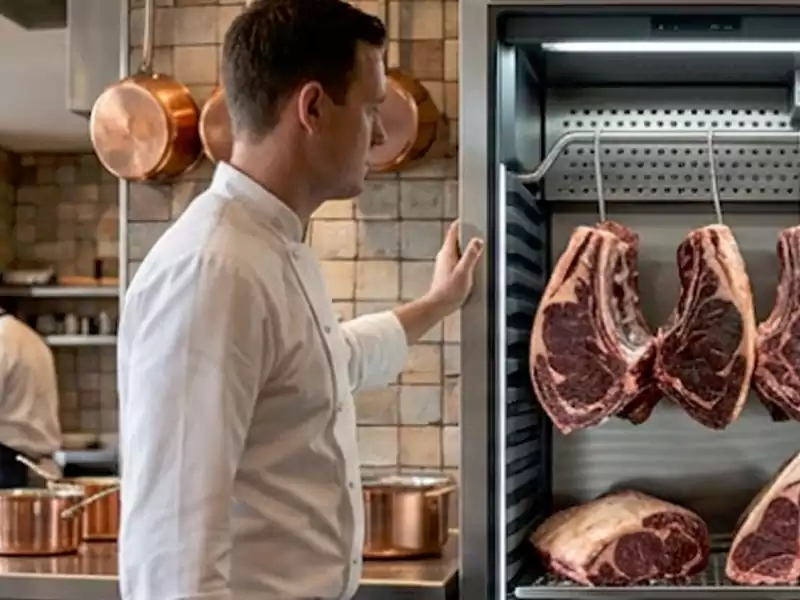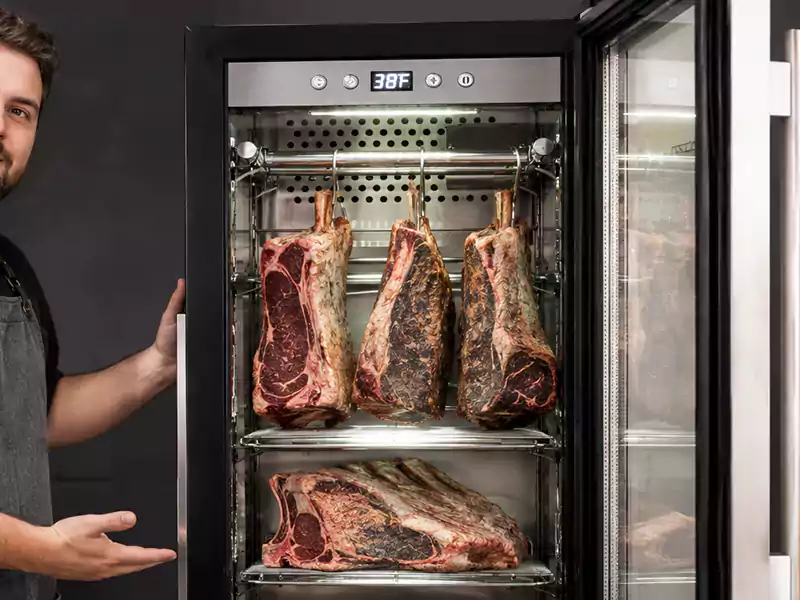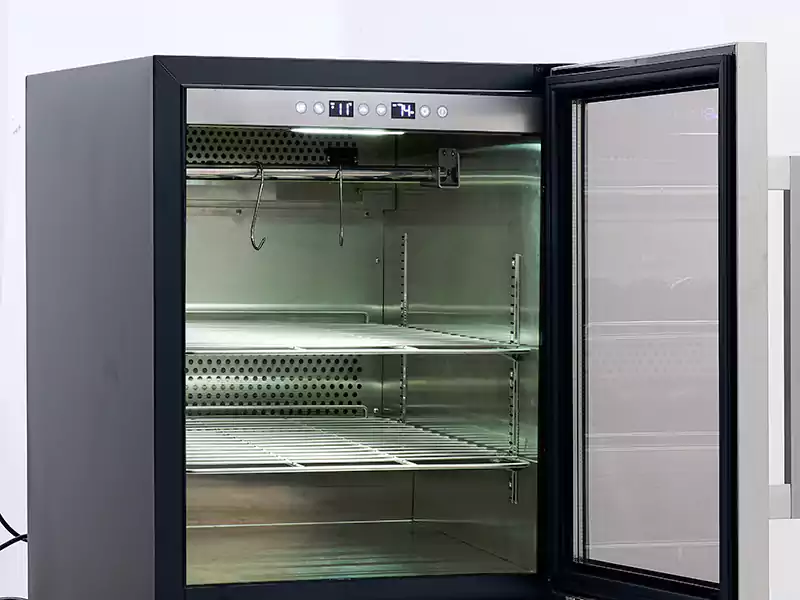
Dry aging beef is a traditional process used to develop deeper flavor, a firmer texture and greater tenderness over time. But dry aging is not simply a matter of leaving a steak in a refrigerator for a few weeks.
A proper dry aging environment requires controlled refrigeration conditions, including temperature, humidity and airflow. Commercial dry aging is typically carried out in controlled environments, while the USDA does not recommend aging beef in a standard home refrigerator.

For restaurants, steakhouses, butcher shops and other professional meat businesses, a dedicated dry aging refrigerator provides a purpose-built environment for managing the conditions involved in beef aging.
In this guide, we’ll explain how dry aging works, what conditions matter, why a regular refrigerator is different from a dedicated dry age fridge, and how to choose the right equipment for professional applications.
What Is Dry Aging Beef?
Dry aging is a controlled process in which beef is held in a carefully managed refrigerated environment for an extended period.
During aging, moisture gradually leaves the meat while naturally occurring enzymes and biochemical processes contribute to changes in texture and flavor.
The process is different from simply storing beef in a refrigerator.
A standard refrigerator is designed primarily for food storage. A dedicated meat aging refrigerator is designed to create a more controlled aging environment by managing factors such as:
- 温度
- Humidity
- Air circulation
- Internal storage conditions
- Hygiene management
This is why professional dry aging operations generally use dedicated equipment rather than a conventional household refrigerator.
Can You Dry Age Beef in a Refrigerator?
Yes, beef can be dry aged in a dedicated dry aging refrigerator designed for the application.
However, that does not mean that any standard refrigerator is suitable for dry aging.
A purpose-built dry age fridge is designed to manage the environmental conditions required for the aging process. By contrast, a conventional refrigerator is primarily designed to keep food cold and safe for normal storage.
The distinction is particularly important when aging beef over extended periods.
According to the USDA, commercial beef aging is carried out under controlled temperature and humidity conditions, and the agency does not recommend aging beef in a home refrigerator.
For this reason, a better question is not simply: “Can I dry age beef in a refrigerator?”
It is: “Do I have a refrigerator specifically designed to provide the controlled environment required for dry aging?”
For commercial applications, a dedicated commercial dry age refrigerator is the more appropriate equipment category.

Why a Dedicated Dry Age Fridge Is Different From a Regular Refrigerator
A standard refrigerator and a dry aging refrigerator may both use refrigeration, but they are designed for different purposes.
温度制御
Temperature is one of the fundamental conditions that must be controlled during meat aging.
A standard refrigerator is designed primarily for general food storage, whereas a dry aging refrigerator is designed around a more controlled operating environment.
The exact operating condition should always follow the equipment manufacturer’s specifications and the requirements of the intended application.
湿度管理
Humidity plays an important role in the dry aging environment because the process involves controlled moisture loss.
A dedicated meat aging fridge can provide humidity management designed specifically for aging applications.
Without appropriate environmental control, moisture management can become less predictable.
空気循環
Controlled airflow helps create a more consistent environment within the cabinet.
A dedicated dry age cabinet is designed to circulate air around the aging area rather than simply cooling packaged food.
Airflow should be distributed consistently without creating unsuitable drying conditions in one area of the cabinet.
Dedicated Aging Environment
One of the biggest differences is that a fridge for dry aging meat is intended specifically for the aging process.
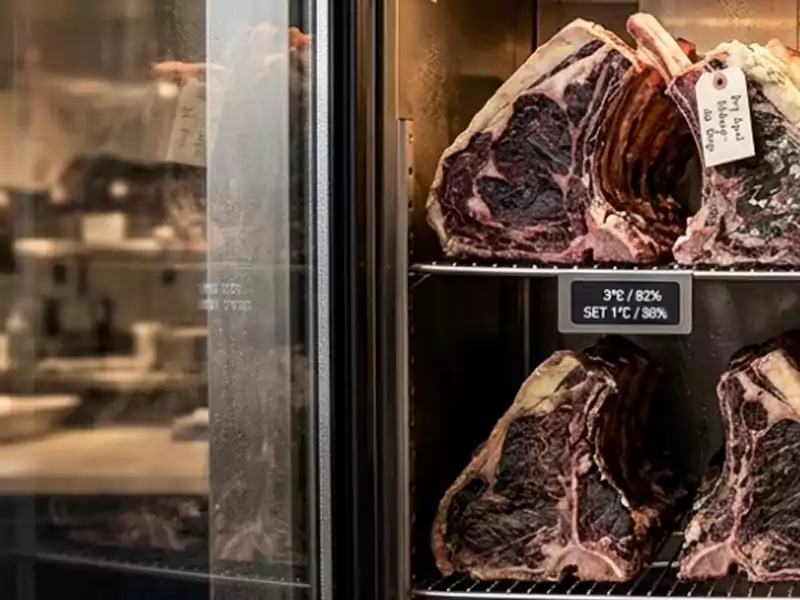
Instead of sharing space with beverages, vegetables, leftovers and other foods, a dedicated cabinet can provide an isolated aging environment.
This is particularly valuable in commercial kitchens and butcher shops where hygiene, organization and workflow matter.
How to Dry Age Beef in a Refrigerator
For professional applications, dry aging should be treated as a controlled process rather than simply storing beef in a cold cabinet.
The following workflow explains the main stages.

Step 1: Select Appropriate Beef
Start with a suitable whole-muscle beef cut intended for dry aging.
Large primal or sub-primal cuts are generally more suitable for extended aging than small individual steaks because the outer surface develops during the aging process and can later be trimmed.
When selecting beef, consider:
- Cut size
- Fat coverage
- Bone-in or boneless configuration
- Initial product quality
- Intended aging period
For commercial operations, the selected meat should be handled according to applicable food-safety procedures from receiving through aging.
Step 2: Prepare the Dry Aging Refrigerator
Before loading the meat, make sure the dry age refrigerator is clean, operating correctly and capable of maintaining the required conditions.
Check:
- 温度
- Humidity
- Air circulation
- Cabinet cleanliness
- 棚
- Door sealing
- Monitoring system
The refrigerator should be designed for the intended aging application rather than adapted from general food-storage equipment.
For a commercial operation, it is also important to avoid overloading the cabinet because sufficient air circulation is needed throughout the aging space.
USDA recommends keeping refrigerator temperatures at or below 40°F (4.4°C) for general refrigerated food safety and notes that cold air needs to circulate throughout the cabinet.
Step 3: Load the Beef Properly
Place the beef on appropriate racks or shelves with enough space around each piece for air circulation.
Avoid allowing individual cuts to touch each other unnecessarily.
The goal is to maintain consistent exposure to the controlled cabinet environment.
For commercial applications, the internal layout of the dry age cabinet should support:
- Air circulation
- Easy inspection
- Efficient product handling
- Cleaning access
Step 4: Maintain Stable Environmental Conditions
Once the beef is inside the refrigerator, stability becomes more important than constantly changing settings.
The aging cabinet should maintain the conditions required for the selected aging program.
Temperature and humidity should be monitored rather than assumed.
This is one of the key differences between a dedicated commercial dry age fridge and an ordinary refrigerator.
A professional unit is designed to provide a more controlled aging environment, while a conventional refrigerator is optimized for general food storage.

Step 5: Monitor the Aging Process
During aging, regularly inspect the cabinet and the condition of the product.
Monitoring should include:
温度
Check whether the cabinet is maintaining the intended operating range.
Humidity
Monitor humidity to ensure it remains within the target range for the application.
気流
Make sure the airflow system is operating normally and that ventilation is not obstructed.
Product Condition
Visually inspect the aging environment and follow your established food-safety and quality-control procedures.
Do not rely only on smell or appearance to determine whether meat is safe. Harmful bacteria cannot necessarily be detected by sight, smell or taste.
What Temperature Should a Dry Age Fridge Be?
There is no single setting that should be applied to every dry aging system without considering the equipment, process and food-safety requirements.
A dedicated dry aging refrigerator should provide a stable, controllable operating environment appropriate for the intended aging application.
For comparison, USDA states that a normal household refrigerator should be maintained at 40°F (4.4°C) or below for food safety.
This should not be confused with a specific dry-aging process specification.
For commercial dry aging, follow the validated process, equipment instructions and applicable food-safety requirements rather than copying a generic refrigerator setting from the internet.
What Humidity Should a Dry Aging Refrigerator Have?
Humidity management is one of the characteristics that distinguishes a dedicated dry aging refrigerator from a normal refrigerator.
The appropriate humidity level depends on the aging system, product and process.
A commercial dry age fridge should allow the operator to monitor and control the internal environment rather than relying on uncontrolled humidity fluctuations.
For example, Sunnai’s current commercial dry aging refrigerator range is specified at approximately 50–85% RH, depending on the model and configuration.
The correct target should always be determined from the specific equipment and application rather than treating one humidity number as universally correct.
How Long Does It Take to Dry Age Beef?
Dry aging is measured in days or weeks rather than hours.
The USDA notes that commercial beef aging can take approximately 10 days to 6 weeks, depending on the aging application.
The appropriate aging duration depends on factors such as:
- Cut
- サイズ
- Fat coverage
- Starting quality
- Desired flavor profile
- Desired texture
- Process conditions
A longer aging period does not automatically mean a better result.
For commercial businesses, the most useful approach is to establish a repeatable aging program rather than choosing a duration based only on a generic online recommendation.
Can You Dry Age Steak in a Refrigerator?
This question requires an important distinction between a dedicated aging refrigerator and a standard kitchen refrigerator.
A commercial steak aging refrigerator can be designed for professional aging applications involving whole-muscle beef and steak cuts.
However, simply placing an individual steak in an ordinary household refrigerator for an extended period is not equivalent to professional dry aging.
A dedicated steak aging fridge is designed around controlled environmental conditions, while a conventional refrigerator is designed for general food storage.
For commercial operators, equipment specifically designed for dry aging is the safer and more practical direction.
Can You Dry Age Beef in a Regular Refrigerator?
This is one of the most common questions about home dry aging.
The short answer is:
A regular refrigerator is not the same as a dedicated dry aging refrigerator.
A standard refrigerator is generally shared with other foods and is not designed as a controlled dry aging environment.
The USDA specifically states that it does not recommend aging beef in a home refrigerator.
A dedicated dry age fridge is designed specifically around the environmental requirements associated with dry aging.
For restaurants, butcher shops and other commercial businesses, purpose-built equipment provides a more suitable foundation for a controlled aging process.
Dry Age Fridge vs. Regular Refrigerator
| 特徴 | Regular Refrigerator | Dedicated Dry Age Fridge |
| Primary Purpose | General food storage | Meat aging |
| Temperature Management | 一般的な冷凍設備 | Controlled aging environment |
| 湿度管理 | Limited / general | Designed for aging applications |
| 気流 | 一般的な冷房 | Managed cabinet airflow |
| 環境の老化 | Not purpose-built | Dedicated aging environment |
| Commercial Meat Aging | 最適化されていません | Designed for professional use |
| Product Display | Depends on refrigerator | Often designed for visible aging |
| Monitoring | General food storage | Aging-focused controls |
The biggest difference is therefore not simply temperature.
It is the overall environmental control system.
Dry Aging Beef in a Wine Fridge: Is It the Same?
A wine cooler is intended primarily to store wine under conditions suitable for bottles.
A dry age refrigerator is designed specifically around meat aging, including environmental management and cabinet configuration.
Although both are refrigerated cabinets, that does not make them interchangeable.
For businesses that plan to dry age beef regularly, a dedicated dry age cabinet is a more appropriate equipment solution.
How Much Beef Can a Dry Age Fridge Hold?
Capacity is one of the most important factors when choosing a commercial meat aging refrigerator.
The usable capacity depends not only on the cabinet’s stated volume but also on:
- Product dimensions
- Shelving configuration
- Air circulation requirements
- Spacing between cuts
- Handling access
- Business workflow
A cabinet should not be selected solely because it has the largest possible internal volume.
Instead, consider how much beef you expect to age at one time and how frequently the cabinet will be loaded and unloaded.
For example, a compact small dry age refrigerator may be suitable for a restaurant with lower aging volumes, while a larger commercial cabinet may be more appropriate for a steakhouse, butcher shop or meat distributor.
Choosing the Right Commercial Dry Age Fridge
When purchasing a commercial dry aging refrigerator, consider the following factors.
1. Capacity
Choose a cabinet that fits your expected aging volume without compromising internal airflow or accessibility.
2. Temperature Control
Look for stable temperature management appropriate for the intended application.
3. Humidity Control
A dedicated humidity-management system provides greater control than a conventional refrigerator.
4. Airflow
Check how air is distributed throughout the cabinet.
5. Filtration and Hygiene
Consider filtration and hygiene-related features according to your operating environment.
6. Display Design
For restaurants and butcher shops, a glass-door cabinet can turn dry aging into part of the customer experience.
7. Ease of Cleaning
Internal construction should allow regular cleaning and maintenance.
8. Capacity for Future Growth
Consider not only current requirements but also expected future demand.
Commercial Dry Age Fridge Applications

A dedicated commercial dry age fridge can support different professional meat-aging applications.
ステーキハウス
Use a visible dry aging cabinet to showcase premium beef while creating a dedicated aging environment.
レストラン
Add in-house dry aging capability without requiring a large walk-in aging chamber.
精肉店
Combine controlled aging and meat display in a dedicated cabinet.
ホテル・ホスピタリティ
Add premium meat aging capability to high-end restaurant operations.
食肉卸売業者
Use higher-capacity commercial dry aging refrigeration for larger-scale aging requirements.
How Sunnai Dry Age Refrigerators Support Commercial Aging
Sunnai’s commercial dry aging refrigerator range is designed around controlled refrigeration, humidity management and internal airflow.
Current models support approximately:
2–14°C Temperature Range
50–85% RH Humidity Range
Depending on model and configuration, the systems can also include features such as: Compressor Refrigeration, Activated Carbon Filtration, UVC Hygiene Support, Digital Controls, Dedicated Aging Cabinet.
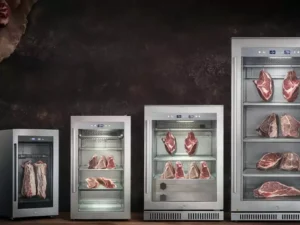
Sunnai currently offers commercial dry aging refrigerator models in different capacities, including 52L, 75L, 125L and 415L, allowing businesses to select a configuration based on their available space and expected aging volume.
Explore Commercial Dry Age Fridges
Dry Aging Refrigerator Quality Matters
A dry aging cabinet is only as useful as its ability to provide a consistent operating environment.
This is why manufacturing quality matters when choosing commercial equipment.
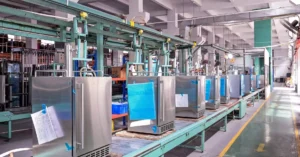
Sunnai’s manufacturing system includes multiple stages of quality control, including component testing, refrigeration testing, safety inspection and final performance checks.
The company’s documented QC procedures include electrical-board temperature testing, automatic vacuum and gas charging, repeated cooling tests, high-voltage testing, quality tracking and aging tests.
For distributors, restaurant equipment suppliers and private-label brands, these manufacturing controls are an important part of evaluating a long-term dry age refrigerator supplier.
Learn More About Sunnai Dry Age Fridge Manufacturing
Based on the Simple Summary Above
Dry aging beef is more than simply placing meat inside a refrigerator and waiting.
A successful commercial aging process depends on a controlled environment, appropriate handling procedures and equipment designed for the application.
A dedicated dry age refrigerator can provide the temperature, humidity, airflow and storage environment needed for professional meat aging, while a conventional refrigerator is primarily designed for general food storage.
For restaurants, steakhouses, butcher shops and meat businesses, choosing the right commercial dry age fridge is therefore an important part of building a repeatable aging process.
Ready to Choose a Commercial Dry Age Fridge?
Explore Sunnai’s commercial dry aging refrigerator range or contact our team to discuss your required capacity, application and configuration.