
The demand for premium, high-quality steaks has never been higher. Today’s diners are educated, discerning, and willing to pay top dollar for a culinary experience they cannot easily replicate at home. At the center of this premium steakhouse experience is dry-aged beef. Known for its intense, nutty flavor and unmatched tenderness, dry-aged meat is a menu highlight that guarantees high ticket prices.
However, for restaurant owners, executive chefs, and hospitality groups, serving this delicacy presents a critical operational dilemma: Should you buy pre-aged meat from a wholesale purveyor, or should you invest in a restaurant dry aging setup to age the meat in-house?
Both avenues offer distinct advantages, but when analyzing the long-term profit margin on dry aged steak, the financial and branding implications diverge significantly. In this comprehensive guide, we will break down the true cost of dry aging beef at a restaurant, evaluate the pros and cons of both methods, and help you determine the most profitable path for your business.
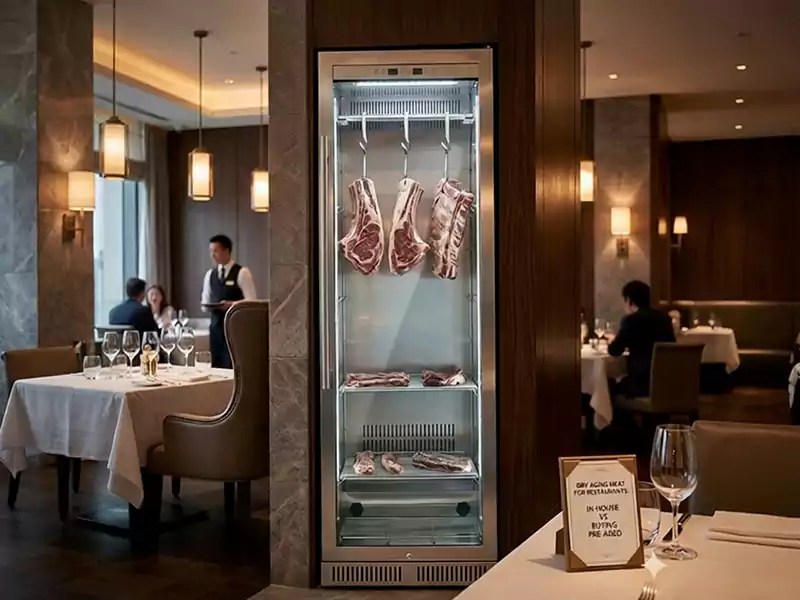
The Traditional Route: Buying Pre-Aged Meat from Purveyors
For many restaurants, purchasing meat that has already been dry-aged by a butcher or a specialized meat supplier seems like the path of least resistance.
The Pros of Buying Pre-Aged
- Zero Upfront Equipment Costs: You do not need to invest capital into specialized refrigeration units immediately.
- Predictable Yield: When you buy a pre-aged subprimal cut, the shrinkage (moisture loss) and the crust (pellicle) trimming have usually already been factored into the final weight you receive. You know exactly how many steaks you can yield from the cut.
- No Maintenance Required: You bypass the need to monitor humidity levels, manage UVC sterilization, or worry about the commercial meat aging fridge energy consumption on your utility bill.
The Cons of Buying Pre-Aged
Depending on suppliers for your needs may be convenient, but it has notable disadvantages that can impact your profits. The main concern is the high prices of wholesale dry aged beef, which are quite substantial. Suppliers take on the expenses related to the time, storage, and weight loss during the aging process, and then charge you with those costs along with an additional high fee.
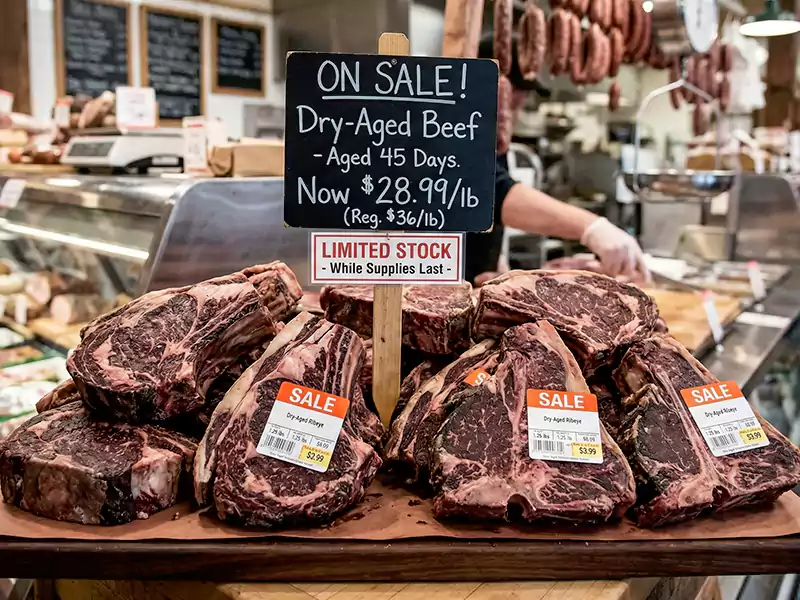
Furthermore, you lose control over the product. If your supplier ages their beef for 30 days, your menu is restricted to 30-day aged beef. You also lose the unique branding opportunity of having a signature flavor profile. If the steakhouse down the street uses the same purveyor, your steaks will taste identical. In a competitive hospitality market, lack of differentiation is a silent killer.
The Game Changer: In-House Dry Aging for Restaurants
Taking control of the dry aging process by bringing it in-house has become the gold standard for high-end steakhouses, boutique butcheries, and ambitious restaurants.
1. Exponentially Higher Profit Margins
The financial argument for in-house aging is undeniable. Let us look at a simplified breakdown of the cost of dry aging beef at a restaurant.
When you purchase fresh, high-quality subprimal cuts (like a bone-in ribeye or short loin) at standard wholesale prices, you are paying a fraction of the cost of pre-aged meat. Even after accounting for the typical 15% to 25% weight loss (shrinkage) and the trimming of the pellicle over a 30 to 45-day aging period, the net cost per usable ounce of in-house dry-aged beef is substantially lower than buying it pre-aged.
By eliminating the middleman’s markup, restaurants often see their profit margin on dry aged steak increase by 40% to 60%. Over the course of a busy fiscal year, these saved margins translate into tens of thousands of dollars in pure profit.
2. Unmatched Brand Prestige and Visual Merchandising
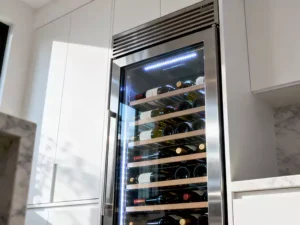
People eat with their eyes first. A sleek, illuminated commercial dry aging cabinet placed visibly in your dining room or near the entrance is the ultimate marketing tool. It signals to your guests that you are serious about your craft.
Seeing the primal cuts aging gracefully behind UV-tinted glass builds anticipation and justifies the premium price tag on the menu. Diners are no longer just paying for a meal; they are paying for the artisanal process they can witness firsthand.
3. Total Control Over the Flavor Profile
When you age in-house, you are the master of your menu. Want to offer a subtly tender 28-day aged strip? You can do that. Want to challenge your VIP guests with an intensely funky, blue-cheese-forward 60-day or 90-day aged ribeye? You have the complete freedom to do so. This level of customization allows you to create a proprietary flavor profile that becomes your restaurant’s exclusive signature.
Calculating the Commercial Dry Age Fridge ROI
The primary hesitation restaurant owners face when considering an in-house restaurant dry aging setup is the initial capital expenditure for the equipment. However, when viewed through the lens of Return on Investment (ROI), a high-quality commercial dry aging fridge pays for itself incredibly fast.
Let’s assume a commercial unit costs a few thousand dollars. If you sell 50 dry-aged steaks a week, and your in-house aging increases your net profit by just $15 per steak (compared to buying pre-aged), that is an extra $750 of profit per week. At that rate, the equipment pays for itself in just a few months. From that point onward, the machine is a pure profit generator for your business for years to come.
Equipment Matters: Setting Up for Success
In order to consistently and safely maintain these profit margins, it is not sufficient to store raw beef in a typical commercial refrigerator. Standard refrigerators do not provide stable temperatures, do not have accurate humidity regulation, and can promote bacterial growth, leading to spoiled meat and potential violations of health codes.
Successful in-house aging requires a purpose-built environment. You need equipment that guarantees:
- Microclimate Control: Maintaining a precise temperature (usually between 34°F and 38°F) and a strict relative humidity level (typically 75% to 85%).
- Active Airflow: Gentle, continuous air circulation to ensure the meat dries evenly and forms a protective crust without rotting.
- Sterilization Technology: Integrated UVC lighting and carbon filtration systems to kill ambient bacteria and neutralize odors, ensuring total food safety.
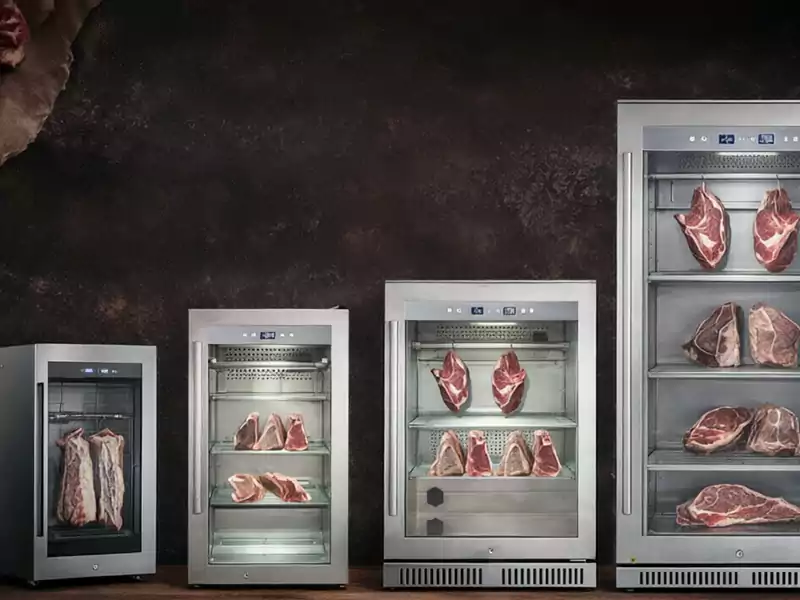
Sourcing reliable equipment directly from a professional dry age fridge manufacturer is the most strategic move a restaurant can make. By working directly with the factory, B2B buyers can avoid distributor markups, secure better warranties, and access direct technical support to ensure their investment operates flawlessly. Furthermore, factory-direct sourcing often allows for OEM/ODM customizations, meaning hospitality groups can even have their equipment branded with their own logos.
The Verdict: Which is Right for Your Business?
If you are running a high-volume diner where steak is just a minor menu item, buying a few pre-aged steaks from a purveyor might make sense.
However, if you are operating a steakhouse, a fine-dining establishment, or a high-end meat distribution business, in-house dry aging is the clear winner. The initial investment in commercial dry aging equipment is rapidly offset by the dramatic reduction in food costs, the massive increase in profit margins, and the undeniable visual appeal that draws customers in.
Stop paying a premium for someone else’s aging process. Invest in the right equipment, take control of your supply chain, and start maximizing the revenue potential of every steak you serve.
 IT
IT  EN
EN  AR
AR  RU
RU  FR
FR  KO
KO  JA
JA  ES
ES