
Dry aging is a traditional method of aging beef that uses time, refrigeration and a controlled environment to develop changes in tenderness, flavor and appearance.
But dry aging is more than simply putting beef into a refrigerator and waiting.
A proper dry aging environment needs careful control of factors such as temperature, relative humidity and airflow. These conditions influence moisture loss and the biochemical changes that take place during aging. Industry research describes dry aging as storing beef carcasses, primals or subprimals without protective packaging at refrigerated temperatures for an extended period under controlled humidity and airflow.
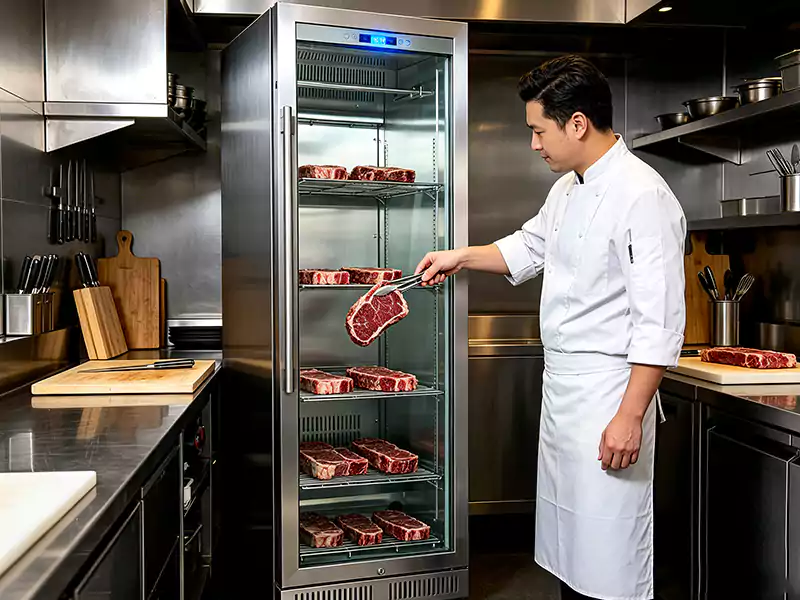
So, what exactly is a dry age fridge, and how is it different from a standard refrigerator?
In this guide, we explain how a dry aging refrigerator works, which environmental factors matter, what a commercial dry age cabinet is designed to do, and how to choose the right equipment for professional meat aging.
What Is a Dry Age Fridge?
A dry age fridge, also called a dry age refrigerator, meat aging fridge or dry aging refrigerator, is a specialized refrigeration cabinet designed to provide a controlled environment for dry aging meat.
Unlike a standard refrigerator, a dedicated dry age fridge is designed around multiple environmental variables rather than cooling alone.
The main factors include:
- Temperature
- Relative humidity
- Air circulation
- Cabinet conditions
- Product spacing and storage
- Hygiene and cleaning
During dry aging, beef is generally held without protective packaging in a refrigerated environment. Natural enzymatic and biochemical processes continue during the aging period, while moisture gradually leaves the product. These changes can contribute to improved tenderness and a more concentrated beef flavor.
This is why the term meat aging refrigerator is useful: the equipment is not simply storing cold food; it is designed to provide a dedicated environment for an aging process.
Related Terms
You may also see dry aging equipment described as: Dry age fridge, dry age refrigerator, dry aging refrigerator, meat aging fridge, meat aging refrigerator, dry age cabinet, dry age cooler.
The exact terminology varies between manufacturers, but the important point is the equipment’s actual operating capability rather than the product name alone.
How Does a Dry Age Refrigerator Work?
A professional dry aging refrigerator works by managing several conditions inside the cabinet at the same time.
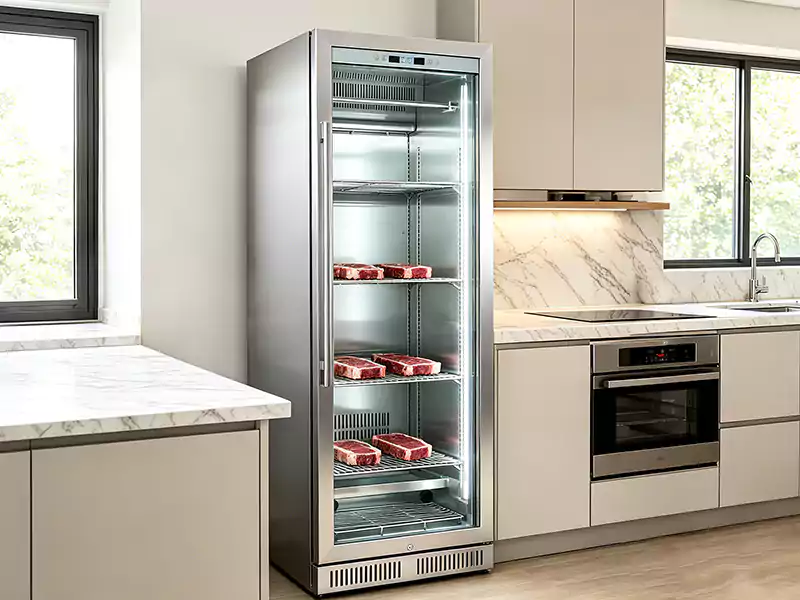
The four most important considerations are temperature, humidity, airflow and aging time.
1. Temperature Control
Temperature is fundamental to refrigerated meat aging.
A dry age fridge needs to maintain a stable operating environment appropriate for the aging process rather than experiencing large fluctuations.
A standard household refrigerator is designed primarily for food storage. A commercial dry aging refrigerator is designed around a more controlled aging environment.
There is no single temperature setting that should be applied universally to every dry aging system. The correct operating condition depends on the equipment, process and applicable food-safety requirements.
For general household food storage, USDA recommends a refrigerator temperature of 40°F (4.4°C) or below. Commercial beef aging, however, involves controlled conditions and should follow an appropriate validated process rather than simply copying a household refrigerator setting.
2. Humidity Management
Humidity is another key factor in dry aging.
During the aging process, moisture gradually leaves the meat. Relative humidity affects the rate at which moisture is lost and therefore plays an important role in the overall aging environment.
A commercial meat aging fridge should provide a controlled and monitorable humidity environment rather than relying entirely on the naturally fluctuating humidity of a conventional refrigerator.
Industry research identifies relative humidity as one of the primary parameters that must be controlled during dry aging.
For example, Sunnai’s current commercial dry aging refrigerator range specifies a humidity range of approximately 50–85% RH, depending on model configuration.
The specific operating target should always be selected according to the equipment and intended aging process.
3. Air Circulation
Airflow is essential because the aging cabinet needs to maintain a reasonably consistent internal environment.
A dedicated dry age cabinet uses controlled air circulation to help distribute air throughout the aging chamber.
Good airflow management helps reduce stagnant areas and supports more consistent environmental conditions around the product.
However, more airflow does not automatically mean better aging.
The goal is controlled and appropriate air movement rather than simply maximizing fan speed.
Industry dry-aging research identifies airflow alongside temperature, humidity and aging time as one of the key factors affecting the process.
4. Aging Time
Time is another important variable. Commercial dry aging may take weeks rather than days. USDA notes that beef aging can take approximately 10 days to 6 weeks, depending on the application.
Beef research also describes dry aging as a process generally conducted over approximately one to five weeks, although actual aging programs can vary by product and operation.
Aging longer does not automatically mean better results. The appropriate duration depends on factors such as:
- Cut
- Size
- Fat coverage
- Initial product quality
- Temperature
- Humidity
- Airflow
- Desired flavor profile
- Desired tenderness
- Commercial process requirements
What Happens to Beef During Dry Aging?
So, what actually happens inside a dry aging refrigerator? Several changes take place over time.
Moisture Loss
Moisture gradually leaves the exposed surface of the beef. This reduces the product’s weight and changes the concentration of its flavor compounds.
Enzymatic Changes
Natural enzymes in the muscle continue to act on components of the meat. These biochemical processes contribute to changes in texture and tenderness during postmortem aging.
Flavor Development
Dry aging can produce a more concentrated and distinctive beef flavor. The exact flavor profile depends on the cut, aging conditions, duration and other process variables.
Surface Development
Because dry-aged beef is exposed to air rather than sealed in protective packaging, the outer surface changes during aging. That means the exterior may need to be trimmed before the final product is prepared for sale or cooking.
This is one reason dry aging is commonly performed on larger cuts or subprimals rather than individual retail steaks.
Dry Aging vs. Wet Aging
When it comes to developing flavor and tenderness in beef, there are two main techniques: dry aging and wet aging.
Dry Aging
In this method, cuts of beef are left exposed—without any protective plastic or packaging—inside a highly controlled refrigerated space. To pull this off safely and effectively, you have to carefully balance four crucial elements:
- Exact temperature
- Precise relative humidity
- Consistent airflow
- Time
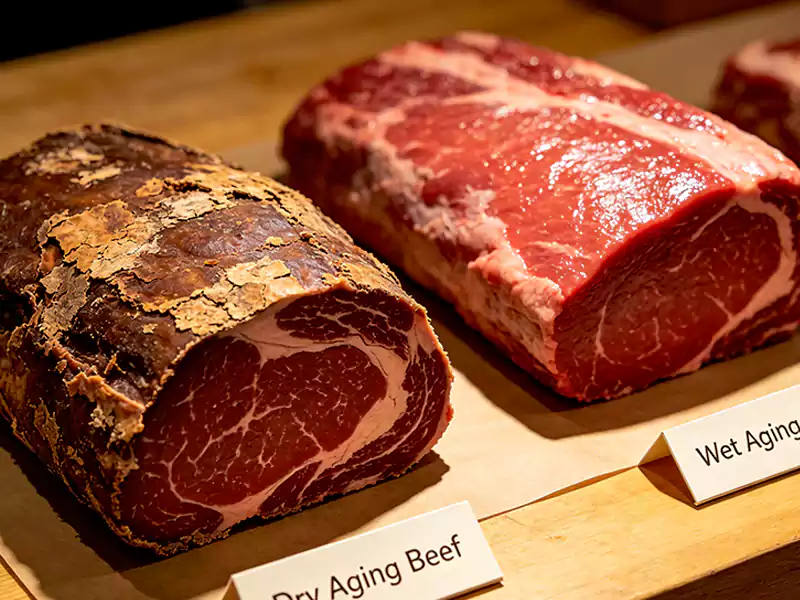
Wet Aging
With this approach, the beef is tightly sealed in vacuum packaging and kept safely refrigerated. Because the plastic wrapper completely blocks out the air, the meat stews in its own natural juices, which fundamentally changes how moisture is retained throughout the aging timeline.
| Feature | Dry Aging | Wet Aging |
| Packaging | No protective packaging | Vacuum packaging |
| Moisture | Gradually lost | More moisture retained |
| Environment | Controlled open-air cooler | Refrigerated packaged environment |
| Flavor Development | More concentrated aging profile | Different flavor profile |
| Equipment | Dry aging refrigerator/cabinet | Standard refrigerated storage can be used depending on process |
| Typical Application | Premium beef/specialty products | Broad commercial beef aging |
The choice between dry and wet aging depends on the business model, desired product characteristics and operating economics.
Dry Age Fridge vs. Standard Refrigerator
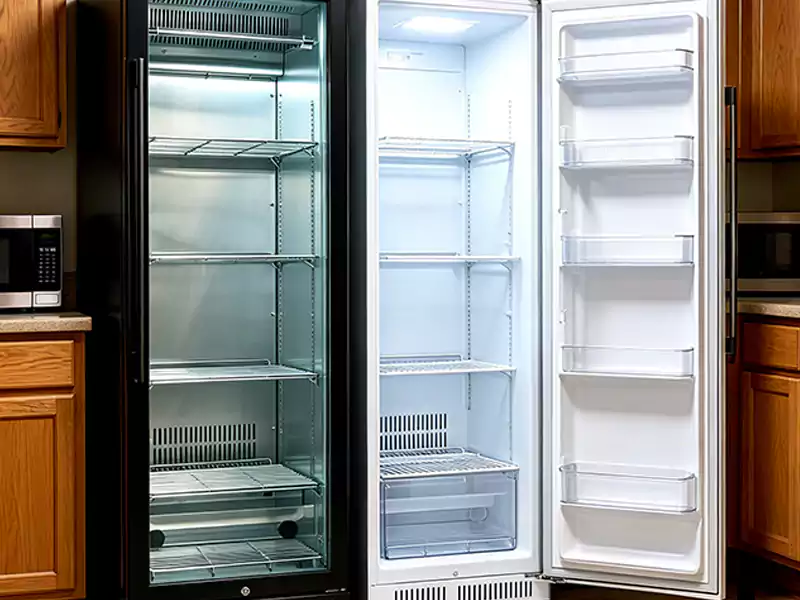
One of the most common questions is: Why not just use a regular refrigerator?
The biggest difference is not simply whether the refrigerator can become cold enough.
It is whether the equipment is designed to provide a controlled aging environment.
| Feature | Standard Refrigerator | Dry Age Refrigerator |
| Primary Purpose | General food storage | Meat aging |
| Temperature Management | General cooling | Aging-focused control |
| Humidity Management | Limited/general | Dedicated humidity management |
| Airflow | General refrigeration | Controlled cabinet airflow |
| Aging Environment | Not purpose-built | Purpose-built |
| Product Storage | Mixed food storage | Dedicated aging space |
| Commercial Aging | Not optimized | Designed for professional use |
For commercial operations, a purpose-built commercial dry age fridge provides a more appropriate equipment platform for establishing a repeatable aging process.
USDA specifically states that it does not recommend aging beef in a home refrigerator, while commercial aging is performed under controlled temperature and humidity conditions.
Can You Dry Age Beef in a Regular Refrigerator?
This is one of the most common searches related to dry aging. The important distinction is between:
A refrigerator that happens to be cold and a refrigerator specifically designed for dry aging.
A conventional household refrigerator is normally used for multiple foods and is not designed to maintain the controlled environmental conditions used in professional beef aging. For this reason, a standard refrigerator should not be treated as equivalent to a dedicated dry aging refrigerator.
For professional businesses, a purpose-built commercial dry age fridge provides a more suitable foundation for controlling the aging environment.
What Temperature Should a Dry Age Fridge Be?
The correct operating temperature depends on the specific equipment and the validated process being used. There is no single number that can be applied to every dry aging refrigerator.
For general refrigeration, USDA recommends keeping refrigerators at 40°F (4.4°C) or below.
Industry research on dry aging shows that storage temperature is one of the primary variables that influences the aging process, alongside humidity, airflow and aging time.
For this reason, operators should:
- Follow the equipment manufacturer’s specifications
- Maintain a stable operating environment
- Monitor actual cabinet conditions
- Use a validated aging process
- Follow applicable local food-safety requirements
Sunnai’s current commercial dry aging refrigerator models provide a temperature range of approximately 2–14°C, depending on configuration.
This is an operating range of the equipment, not a recommendation that every aging program should use the full range.
What Humidity Should a Dry Aging Refrigerator Have?
Humidity affects the rate of moisture loss during dry aging.
If humidity is too low, moisture loss can become excessive. If conditions are not appropriately controlled, the aging environment may become inconsistent.
For this reason, a dedicated meat aging refrigerator should provide humidity monitoring and control appropriate to the equipment and process.
Industry dry-aging research identifies relative humidity as a primary process variable. Sunnai’s current commercial dry age fridge range specifies approximately: 50–85% RH
The correct operating point within that range depends on the product, model and aging process.
How Long Should Beef Be Dry Aged?
Dry aging generally takes weeks rather than just a few days. USDA states that beef aging can take approximately 10 days to 6 weeks.
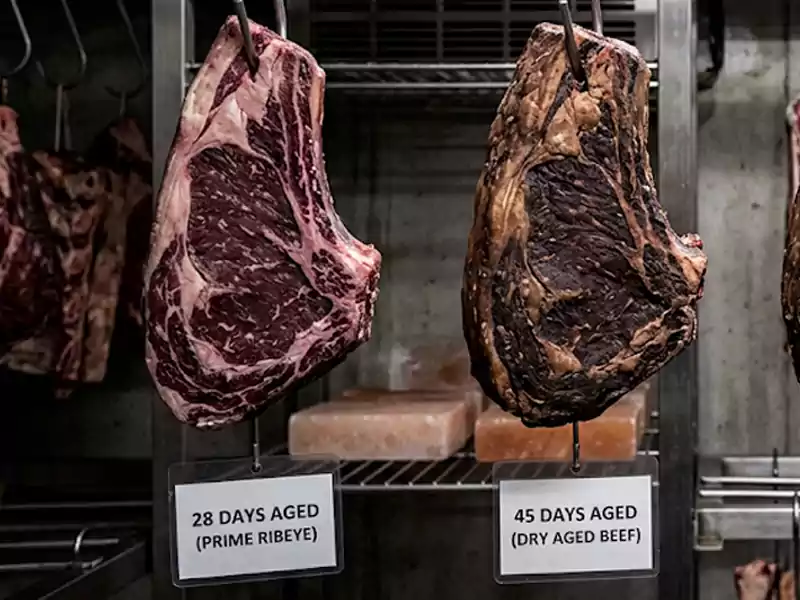
Research from the beef industry describes dry aging as commonly taking approximately one to five weeks, depending on the product and desired outcome.
There is no universal “best” aging time. A commercial operator should consider:
Shorter Aging
May produce less pronounced dry-aging characteristics.
Medium Aging
Allows more time for tenderness and flavor changes to develop.
Longer Aging
Can produce a more pronounced aging profile but may also increase moisture loss and trimming loss. For a commercial business, consistency is often more important than simply maximizing aging time.
What Kind of Beef Is Best for Dry Aging?
Dry aging is commonly performed on:
- Beef primals
- Subprimals
- Large whole-muscle cuts
Industry sources describe dry aging as a process applied to beef carcasses, primals and subprimals stored without protective packaging under refrigerated conditions.
Larger cuts can be more practical for extended dry aging because the outer surface can be trimmed after aging.
When choosing beef for a dry aging program, businesses should consider:
- Cut size
- Marbling
- Fat coverage
- Initial quality
- Target product positioning
Can a Dry Age Fridge Be Used for Other Meats?
Dry aging equipment is primarily associated with beef, but specialized aging cabinets may also be used for selected other meats or food products depending on the equipment, process and intended application.
However, different products can have different handling, temperature, humidity and food-safety requirements.
Businesses should therefore avoid assuming that one dry-aging profile is appropriate for every type of meat. The equipment should be selected and operated according to the requirements of the specific product and validated process.
What Is a Commercial Dry Aging Cabinet?
A commercial dry aging cabinet is a dedicated refrigeration cabinet designed for professional meat aging applications.
A commercial cabinet typically combines:
- Refrigeration
- Temperature Management
- Humidity Management
- Air Circulation
- Internal Storage
- Monitoring / Controls
Depending on the model, it may also include additional functions such as filtration, lighting and hygiene-related features.
For restaurants, steakhouses, butcher shops, hotels and meat distributors, a commercial dry aging cabinet can provide a dedicated aging environment without requiring a large walk-in aging chamber.
What Features Should You Look for in a Dry Age Refrigerator?
Beyond exterior aesthetics, choosing the right dry aging cabinet comes down to three essential factors:
Precision Microclimate Control
Successful aging relies on absolute environmental consistency. Look for digital precision controls that seamlessly manage temperature, dynamic humidity regulation, and 3D circulating airflow to ensure uniform drying across all cuts while preventing spoilage.
Capacity & Practical Interior Layout
Choose a size tailored to your aging volume and available footprint. Ensure the interior features food-grade, easy-to-clean materials alongside heavy-duty, adjustable shelving and hanging rods to accommodate various cuts (like bone-in ribeyes or striploins) and operational workflows.
Display Appeal & Effortless Maintenance
For commercial venues, UV-protected glass doors turn the aging process into a powerful visual showcase. Pair this with intuitive external monitoring panels, hygienic antimicrobial interiors, and removable components for quick, hassle-free daily maintenance.
Commercial Dry Aging Refrigerator Applications
A dedicated commercial dry aging refrigerator elevates meat programs across several professional sectors:
Steakhouses, Restaurants & Luxury Hotels
Introduces an in-house aging program without the massive footprint of a dedicated walk-in aging room. Front-of-house placement turns premium beef aging into an eye-catching visual feature that enhances the guest dining experience.
Craft Butchery & Retail
Merges precise, small-batch aging with an attractive customer-facing product display, allowing butchers to showcase quality and craft right on the sales floor.
Meat Processors & Wholesale Distributors
High-capacity units provide a scalable, plug-and-play solution for businesses managing larger aging volumes and specialized client orders.
Why Dedicated Dry Aging Equipment Matters
Professional dry aging requires consistency. If temperature changes significantly, humidity fluctuates or airflow becomes uneven, the aging environment can become more difficult to control. This is why a dedicated dry aging refrigerator is more than a refrigerator with a low-temperature setting. It is a system designed around the interaction between:
- Temperature
- Humidity
- Airflow
- Time
- Storage Configuration
Industry research specifically identifies days of aging, storage temperature, relative humidity and airflow as key dry-aging parameters.
For commercial operators, this controlled environment is important not only for product quality but also for establishing a repeatable operating process.
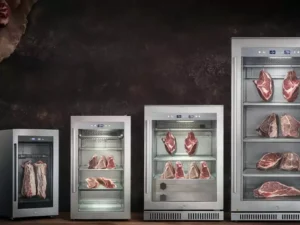
How Sunnai Dry Age Refrigerators Are Designed for Commercial Applications
Sunnai manufactures commercial dry aging refrigerators for professional applications.
Our current range includes: 52L, 75L, 125L, 415L
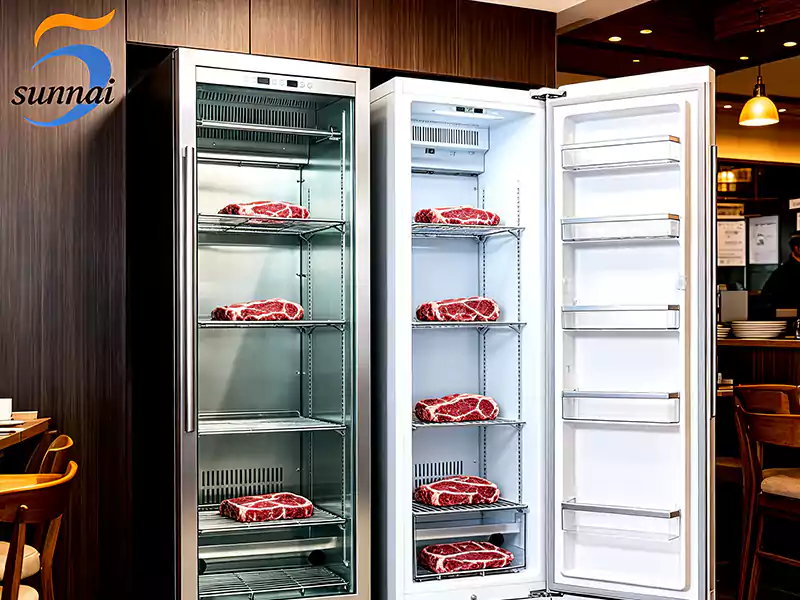
with model configurations supporting approximately 2–14°C temperature control and 50–85% RH humidity control.
Depending on configuration, features can include: Compressor refrigeration, humidity control, air circulation, activated carbon filtration, UVC hygiene support, digital controls.
Offering a versatile range of capacities for standard commercial use, Sunnai also provides end-to-end OEM and ODM dry aging refrigerator solutions for distributors and private-label brands.
How to Choose the Right Commercial Dry Age Fridge
Before investing in a dry aging cabinet, evaluate these four key factors:
- Aging Volume & Capacity: Estimate your average working stock. Ensure internal usable space aligns with your batch sizes and beef cuts.
- Floor Space & Ventilation: Measure the installation footprint, ensuring adequate clearance for door swing, proper airflow/ventilation, and daily staff access.
- Operational Focus: Align specs with your business model—hospitality venues often prioritize display glass and front-of-house aesthetics, while butcheries and distributors favor maximize storage density.
- Customization & OEM Needs: If purchasing for a brand or distribution, check for tailored branding, custom racking configurations, or specific electrical and plug standards.
Finally, I Would Like to Say
A dry age fridge is not simply a refrigerator that keeps meat cold.
It is a specialized refrigeration system designed to manage the environmental conditions that influence the dry aging process.
Temperature, humidity, airflow and aging time all play important roles. When these factors are carefully controlled, a dedicated dry aging refrigerator can provide a more consistent environment for professional beef aging than a conventional refrigerator.
For restaurants, steakhouses, butcher shops and meat businesses, the right equipment should be selected according to capacity, application, operating conditions and workflow.
For distributors and private-label brands, the choice of manufacturer is equally important.
Looking for a Commercial Dry Age Fridge?
Explore Sunnai‘s commercial dry aging refrigerator range or contact our team about standard models, OEM and ODM requirements.



 EN
EN  AR
AR  RU
RU  FR
FR  IT
IT  KO
KO  JA
JA  ES
ES  TH
TH