
Dry aging beef is often associated with simply placing meat in a refrigerator and leaving it there for several weeks. In reality, the process is much more dependent on environmental control.
So, can you dry age beef in a regular refrigerator?
The important distinction is between a refrigerator that is simply cold and a refrigerator specifically designed for dry aging.
Dry aging beef requires control of several factors, including storage temperature, relative humidity, airflow and aging time. Beef industry guidance identifies these as key parameters in the dry aging process.
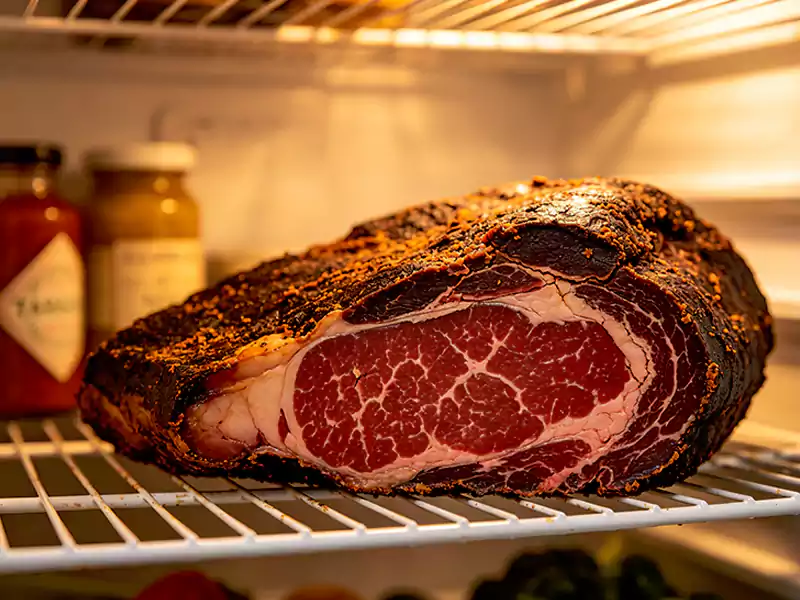
A standard household refrigerator is designed primarily for general food storage, not for maintaining the controlled environment required for professional dry aging.
For businesses such as steakhouses, restaurants, butcher shops and meat distributors, a purpose-built commercial dry age fridge provides a much more appropriate equipment platform for establishing a controlled aging process.
Can You Dry Age Beef in a Regular Refrigerator?
That entirely depends on how you define a “refrigerator.”
If you are referring to a purpose-built commercial dry aging cabinet, the answer is absolutely. These specialized units are engineered to orchestrate the precise, controlled microclimate required for professional aging.
However, if you mean a standard household fridge used for everyday cold storage, the reality is completely different. While a conventional unit keeps inventory cold, true dry aging demands far more than basic refrigeration. Food science identifies four non-negotiable variables for successful beef dry aging:
- Aging time
- Storage temperature
- Relative humidity
- Dynamic Airflow
A standard consumer refrigerator simply lacks the advanced technology needed to actively monitor and stabilize these critical environmental factors.
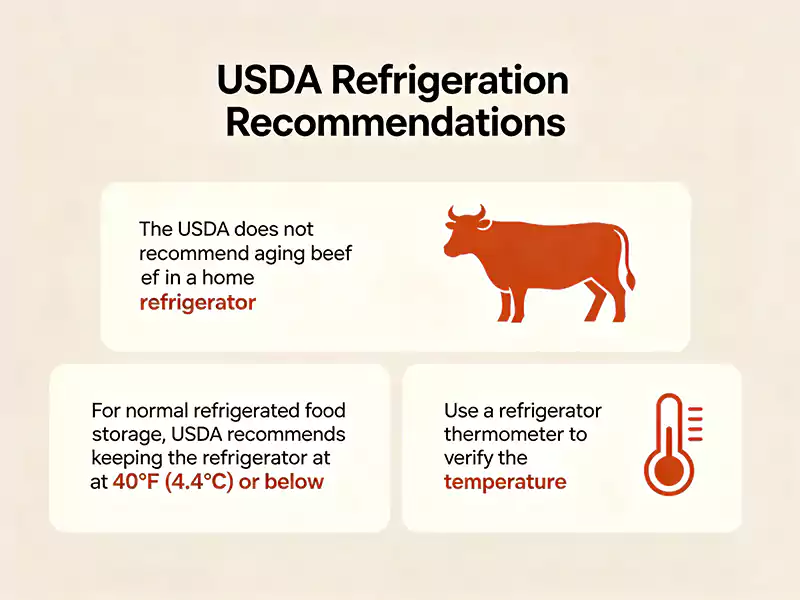
Furthermore, the USDA explicitly advises against attempting to age beef in standard home refrigerators. For standard food safety, the USDA recommends keeping regular storage units strictly at or below 40°F (4.4°C) and verifying temperatures with a dedicated thermometer.
Ultimately, while conventional refrigerators excel at standard meat storage, they lack the technical sophistication and precise environmental control required to function as a professional dry aging system.
Why Is Dry Aging Different From Regular Refrigeration?
The fundamental difference lies in the equipment’s core purpose. Standard commercial refrigerators are engineered primarily for general preservation. Their core functions include:
- Keeping perishable inventory consistently cold.
- Slowing bacterial growth for safe, short-term holding.
- Accommodating a wide, mixed variety of food products.
- Maintaining a baseline chilled space without precise microclimate control.
In stark contrast, a purpose-built dry aging cabinet orchestrates a highly specialized microclimate dedicated exclusively to meat maturation. This demands dynamic, simultaneous control over several interconnected variables:
Temperature Stability
The system must hold an unwavering operating climate, actively preventing the fluctuations common in standard bulk storage units.
Relative Humidity
Precise moisture management dictates the evaporation rate, controlling the final yield and preventing excessive product loss.
Dynamic Airflow
Continuous, calculated air circulation guarantees a uniform environment across all cuts, ensuring even curing and preventing localized spoilage.
Extended Time
Unlike short-term cold storage, the equipment safely supports the prolonged durations required for premium beef to tenderize and develop complex flavor profiles.
All these factors operate interdependently within a commercial dry ager. A professional system synchronizes them seamlessly, ensuring that a shift in one variable does not compromise the overall curing environment or the profitability of your end product.
What Happens During Dry Aging in a Refrigerator?
During the dry aging process, operators place unpackaged subprimal beef cuts directly into a specialized, cold environment.
Over extended periods, continuous enzymatic and biochemical reactions naturally break down tough muscle fibers to tenderize the meat. Simultaneously, controlled moisture evaporation concentrates natural proteins and sugars, producing the rich, nutty, and complex flavor profiles signature to aged beef.
To guarantee commercial consistency and predictable yields batch after batch, operators must maintain rigorous control over this internal climate.
Consequently, a dedicated fridge for dry aging meat acts as far more than a basic cold storage cabinet. It functions as an integrated, precision-engineered system built specifically to govern the key environmental variables that drive successful, high-value dry aging.
What Temperature Does a Dry Aging Refrigerator Need?
Temperature is one of the most important variables in both meat storage and dry aging.
For general household refrigeration, USDA recommends maintaining the refrigerator at 40°F (4.4°C) or below.
Dry aging, however, requires a controlled process rather than simply choosing the coldest possible setting.
Beef industry research identifies storage temperature as one of the primary dry-aging parameters and shows that temperature interacts with aging duration and other environmental conditions. This means there is no single temperature setting that should be presented as universally correct for every dry aging system.
When operating a commercial dry age refrigerator, follow:
- The equipment manufacturer’s specifications
- Your validated aging process
- Applicable food-safety requirements
- Monitoring procedures for the actual cabinet environment
Sunnai’s current commercial dry age refrigerator range is designed with an operating temperature range of approximately 2–14°C, depending on model and configuration. That is the equipment’s operating range, not a recommendation to use the entire range for every aging application.
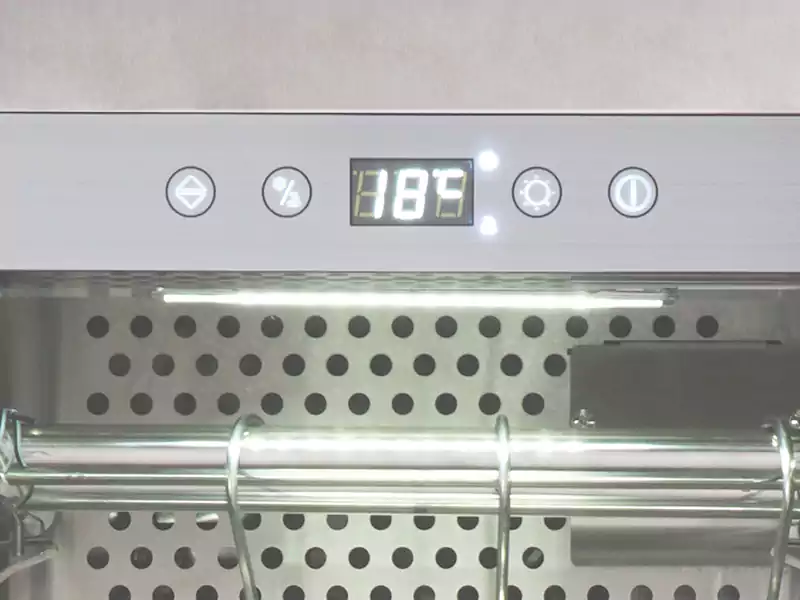
What Humidity Does Dry Aging Need?
Relative humidity stands as a defining factor that distinguishes dry aging in the fridge from basic cold storage.
As beef ages over time, surface moisture continuously evaporates into the surrounding air. Managing this relative humidity dictates the precise rate of moisture loss, directly shaping both flavor concentration and final product yield. Meat industry standards consistently point to relative humidity as a critical, non-negotiable variable in successful aging programs.
A conventional storage cabinet simply lacks the dedicated technology required to manage these sensitive atmospheric shifts.
Conversely, a purpose-built dry aging refrigerator actively monitors, adjusts, and stabilizes humidity levels to maintain an optimal curing environment.
Sunnai’s commercial line operates within a high-precision range of 50–85% RH, allowing operators to fine-tune settings based on specific cabinet configurations, load sizes, and target aging profiles.
Ultimately, choosing the ideal humidity setpoint depends on your specific equipment specifications, beef cuts, and desired dry aging process.
Why Does Airflow Matter During Dry Aging?
Airflow is another critical variable. A refrigerator that is simply cooling the air does not necessarily provide the same internal air movement as a purpose-built dry age cabinet. During dry aging, airflow helps distribute the internal environment around the meat. The goal is not maximum airflow.
The goal is appropriate and consistent air movement. Too much or poorly distributed airflow can affect the drying environment, while insufficient circulation can create less consistent conditions inside the cabinet. Research on dry aging identifies airflow alongside temperature, relative humidity and aging time as a fundamental process variable.
Can You Dry Age Steak in the Fridge?
Buyers and operators frequently ask this exact question: Can you dry age steak in the fridge?
The short answer comes down to the equipment you choose.
A dedicated steak aging refrigerator is engineered from the ground up for professional beef and steak aging applications. A standard household refrigerator, however, falls far short of what a dedicated system offers.
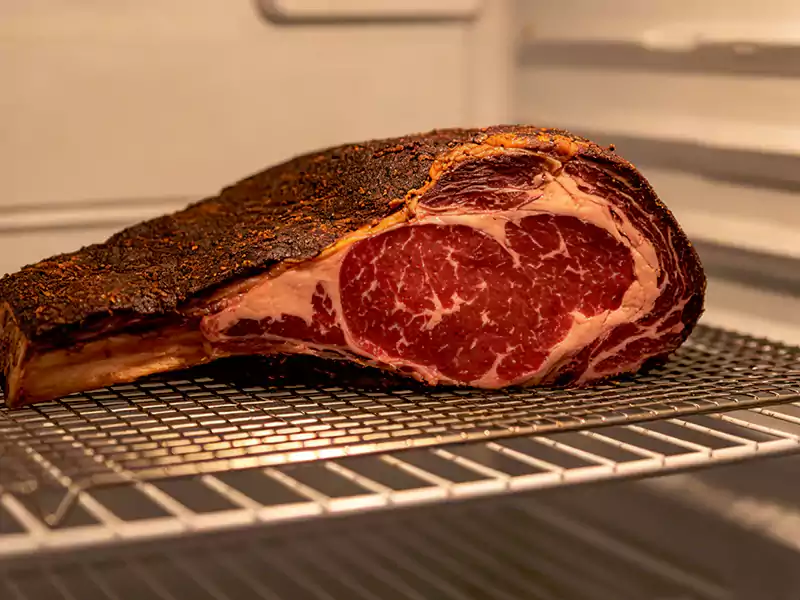
Product size plays a massive role in this equation. Individual, thin-cut steaks behave completely differently from large primal or subprimal cuts. Because dry aging forms an outer crust (pellicle) that operators must trim away before cooking, aging individual retail cuts results in excessive trim loss and low usable yield. Consequently, commercial operators perform authentic professional dry aging almost exclusively on whole, unpackaged subprimals.
To clear up the confusion:
Steak in a normal refrigerator will never equal professional dry aging.
A purpose-built steak aging fridge operates with a completely different objective: protecting your yield, maintaining strict safety parameters, and delivering consistent, high-value profit margins for your business.
What Is the Difference Between Dry Aging and Simply Aging Beef in the Fridge?
“Refrigerating beef” and “dry aging beef” describe two entirely different processes serving distinct business objectives.
Regular Refrigeration
Operators use standard refrigeration simply to keep perishable inventory cold, safe, and properly stored for short-term holding until preparation.
Professional Dry Aging
Conversely, true dry aging intentionally holds premium beef over extended periods within a strictly controlled microclimate to actively transform its flavor and tenderness.
A professional dry aging protocol demands simultaneous control over several interconnected factors:
- Unpackaged beef
- Controlled refrigeration
- Humidity management
- Airflow
- Extended aging time
According to formal beef industry guidelines, authentic dry aging requires operators to store whole beef carcasses, primals, or subprimals completely free of protective packaging. Facilities must hold these cuts at strictly regulated temperatures for one to five weeks, constantly calibrating humidity and air circulation to prevent spoilage and maximize yield.
Ultimately, engineering a precision curing environment bears absolutely no resemblance to simply tossing packaged meat into an everyday refrigerator for a few days.
Dry Aging in the Fridge: What Are the Main Problems With a Regular Refrigerator?
Trying to dry age a beautiful cut of beef in your standard kitchen fridge sounds like a great DIY project, but it actually comes with a few major headaches. Here is why your everyday refrigerator isn’t quite cut out for the job.
1. You Can’t Really Control the Humidity
Standard fridges are designed to keep your groceries cold, not to manage precise moisture levels. Without a way to dial in the exact humidity, your meat can easily dry out way too fast or, worse, stay completely damp.
2. The Airflow is All Over the Place
Proper dry aging relies on even, consistent air circulation. In a regular fridge, the breeze is unpredictable and changes wildly depending on how the appliance is built and which shelf you happen to be using.
3. It’s Sharing Space with Yesterday’s Leftovers
Your kitchen fridge is a busy place, packed with veggies, drinks, and last night’s takeout. Aging beef acts a bit like a sponge for smells, so mixing your expensive cuts with everyday food odors is a quick recipe for weird-tasting meat.
4. The Door is Always Opening
Every time someone opens the fridge door to grab a snack, a rush of warm room-temperature air gets in. All of those sudden spikes in temperature and humidity completely disrupt the delicate aging process.
5. Awkward Storage Space
Normal glass shelves and crisper drawers just aren’t built to properly space out or hang massive cuts of beef. It’s tough to get that crucial 360-degree exposure the meat actually needs to age safely and evenly.
6. It’s Nearly Impossible to Get Consistent Results
Even if your fridge hits the perfect temperature on day one, keeping that climate, moisture, and airflow perfectly stable for weeks on end is a massive struggle. It makes getting the same great result twice incredibly difficult.
Because of all these frustrating hurdles, anyone serious about getting that perfect, funky steak—especially professional operators—will find that investing in a purpose-built commercial dry aging refrigerator is simply the most reliable way to go.
Can You Build a DIY Dry Age Fridge?
If you are a home cooking enthusiast, you have probably thought about putting together your own DIY dry aging fridge. It is a really popular project, and usually involves hacking a standard refrigerator and decking it out with extra gear, such as:
- Precise temperature controllers
- Dedicated humidity humidifiers and dehumidifiers
- Extra fans to boost airflow
- Smart monitors to track the climate
- Air filtration systems
- UV lights or other hygiene upgrades
But here is the catch: just slapping these parts together does not instantly give you a professional, reliable aging setup.
The hardest part isn’t buying or installing the individual gadgets. The real challenge is getting the entire environment to stay perfectly stable and consistent day after day, week after week.
If you are experimenting at home, you also have to take food safety seriously. It is a big enough concern that the USDA explicitly advises against trying to dry age beef in a standard home refrigerator because the risks of spoiling the meat are just too high.
Ultimately, if you are running a restaurant, butcher shop, or any commercial food business, skipping the DIY headache and investing in purpose-built equipment is the most straightforward, stress-free path to a perfectly controlled aging environment.
How Long Can Beef Stay in a Regular Refrigerator?
It is really important to understand the difference between simply storing meat and actually dry aging it.
According to the USDA’s consumer guidelines, raw beef—like steaks and roasts—should generally be cooked or frozen within 3 to 5 days of sitting in a standard kitchen fridge.
You definitely shouldn’t confuse that short window with the commercial dry aging process, which takes place over several weeks under strictly controlled conditions. In fact, beef industry experts usually recommend dry aging periods ranging anywhere from one to five weeks, depending on the specific technique and the rich flavor profile they are trying to achieve.
So, here is the simple breakdown:
3 to 5 days in your kitchen fridge: Standard cold storage.
Several weeks in a precisely controlled climate: True dry aging.
Ultimately, these are two entirely different processes.
Can You Dry Age Beef in a Wine Refrigerator?
Sure, wine refrigerators and dry aging setups both keep things cold, but they are built for entirely different jobs.
A wine cooler is specifically calibrated to protect and store your bottles. On the other hand, a dedicated meat fridge is engineered completely around the strict environmental needs of the aging process.
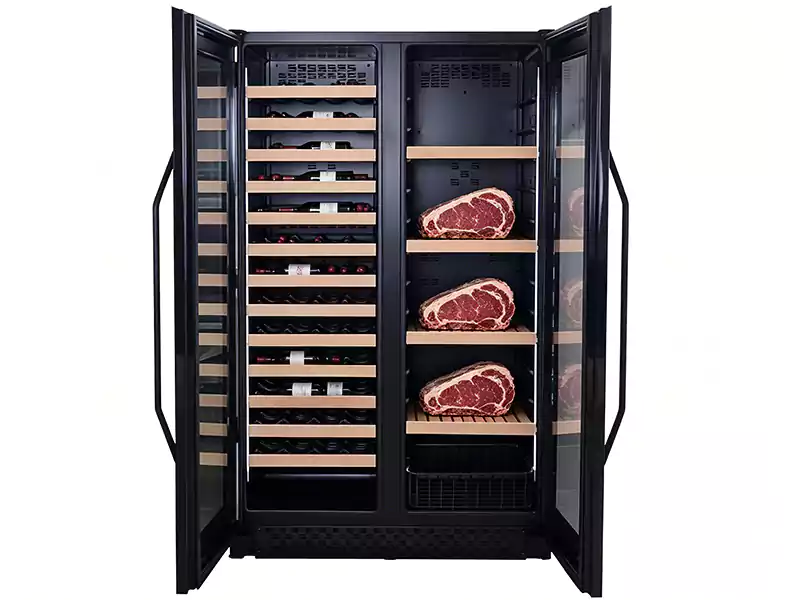
While a wine fridge might let you dial in the right temperature, it usually lacks the precise humidity controls and specialized airflow required to safely and effectively cure meat.
Although a wine fridge may provide temperature control, it does not necessarily provide all of the features required for a dedicated meat aging environment.
Ultimately, for businesses that regularly dry age beef, trying to hack a wine cooler just isn’t worth the risk. Investing in a purpose-built dry age cabinet is always a more appropriate and reliable choice than treating a wine fridge as a direct substitute.
Regular Refrigerator vs. Dry Age Refrigerator
| Feature | Regular Refrigerator | Dedicated Dry Age Refrigerator |
| Primary Purpose | General food storage | Controlled meat aging |
| Temperature Control | General refrigeration | Aging-focused control |
| Humidity Management | Limited / general | Dedicated humidity management |
| Airflow | General cooling | Managed cabinet airflow |
| Storage | Mixed food storage | Dedicated aging space |
| Aging Environment | Not purpose-built | Designed for dry aging |
| Commercial Use | General refrigeration | Professional meat aging |
| Monitoring | General storage | Aging-focused monitoring |
The important difference is therefore not simply whether the refrigerator can reach a certain temperature.
It is whether the entire environment is designed and controlled for the aging process.
What Makes a Commercial Dry Age Fridge Different?
For professional applications, a commercial dry age fridge is designed to integrate multiple functions into one dedicated system.
Depending on the model, these can include:
Temperature Control
Controlled refrigeration for the intended operating range.
Humidity Management
Dedicated control or monitoring of relative humidity.
Air Circulation
Internal airflow designed to create a more consistent cabinet environment.
Filtration
Selected configurations may include activated carbon filtration.
Hygiene Support
Selected models may include UVC-related hygiene features.
Dedicated Cabinet Design
Shelving and internal space designed around professional aging workflows.
These functions are what distinguish a dedicated commercial dry age refrigerator from an ordinary refrigerator.
When Should You Choose a Commercial Dry Age Fridge?
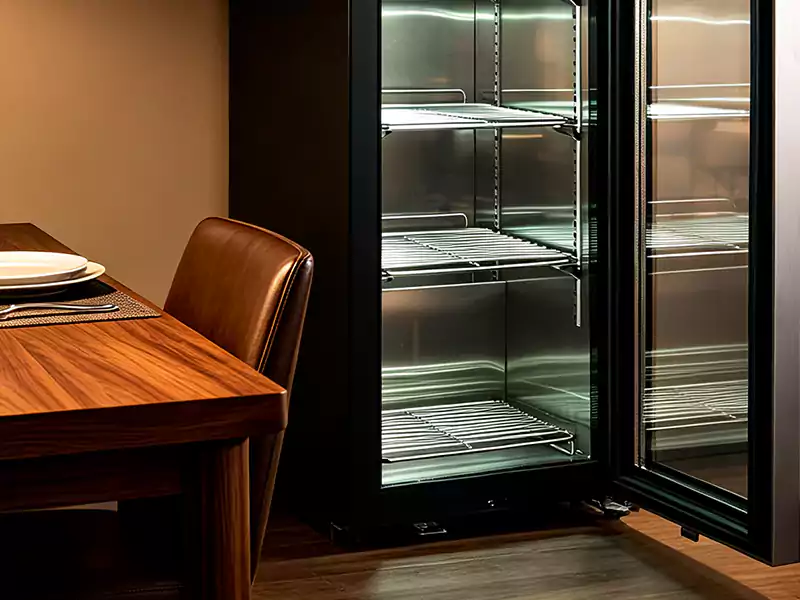
A purpose-built commercial dry aging system is essential when meat aging becomes a core, high-volume operation for your business. Engineered specifically for demanding environments—including premium steakhouses, dedicated butcher shops, wholesale meat distributors, and luxury hospitality sectors—these professional units deliver far more than standard refrigeration. They provide the precise environmental control, expansive capacity, and consistent repeatability required to optimize rigorous commercial workflows and showcase premium cuts with absolute confidence.
How to Choose the Right Dry Aging Refrigerator
Before purchasing a fridge for dry aging meat, consider several factors.
Production Capacity & ROI
Evaluate your target processing volume to ensure profitable yields. Consider whether your business model requires single-door units for specialty cuts or high-capacity, multi-door cabinets designed for continuous wholesale aging and maximum return on investment.
Footprint & Installation Dimensions
Assess the available floor space within your commercial kitchen, butcher shop, or restaurant floor. Factor in the cabinet dimensions as well as the necessary clearance for door swings, proper compressor ventilation, and seamless integration into existing cabinetry.
Precision Temperature Control
Commercial environments demand relentless temperature stability. Ensure the refrigeration and control systems can maintain a precise, unwavering microclimate, rapidly recovering temperatures even during high-frequency door openings in busy service hours.
Active Humidity Management
Consistent humidity is critical to minimizing meat shrinkage and maximizing sellable weight. Look for advanced systems equipped with intelligent sensors and automatic humidification/dehumidification capabilities to protect your premium inventory and optimize profit margins.
Dynamic Airflow Circulation
Proper ventilation prevents stagnant air and uneven aging. A professional-grade fan system must deliver continuous, 360-degree airflow across every shelf, ensuring uniform curing for all cuts while preventing harmful bacterial growth.
Heavy-Duty Internal Configuration
Commercial operations require adaptable, high-load interiors. Prioritize food-grade stainless steel construction, adjustable heavy-duty shelving, and specialized meat rails capable of safely supporting heavy subprimals or whole quarters.
Front-of-House Display Value
For steakhouses and high-end hospitality, the aging process is a powerful visual merchandising tool. Opt for models featuring UV-protected, anti-condensation glass doors and premium LED lighting to showcase your artisanal cuts and drive customer demand.
Global Commercial Compliance
Ensure the equipment aligns with your regional regulatory and electrical infrastructure. Verify necessary health and safety certifications (such as CE, ETL, or NSF), voltage compatibility, and the use of eco-friendly commercial refrigerants to meet local health codes.
Commercial Dry Age Fridge: A Better Alternative to a Regular Refrigerator
Standard refrigerators handle basic food storage, but professional meat aging demands specialized, high-performance equipment. A commercial dry age fridge actively controls temperature, precise humidity, and continuous airflow within a single, purpose-built microclimate. Instead of risking premium cuts in conventional household units, commercial operators rely on these dedicated cabinets to guarantee safe, highly repeatable, and profitable aging processes.
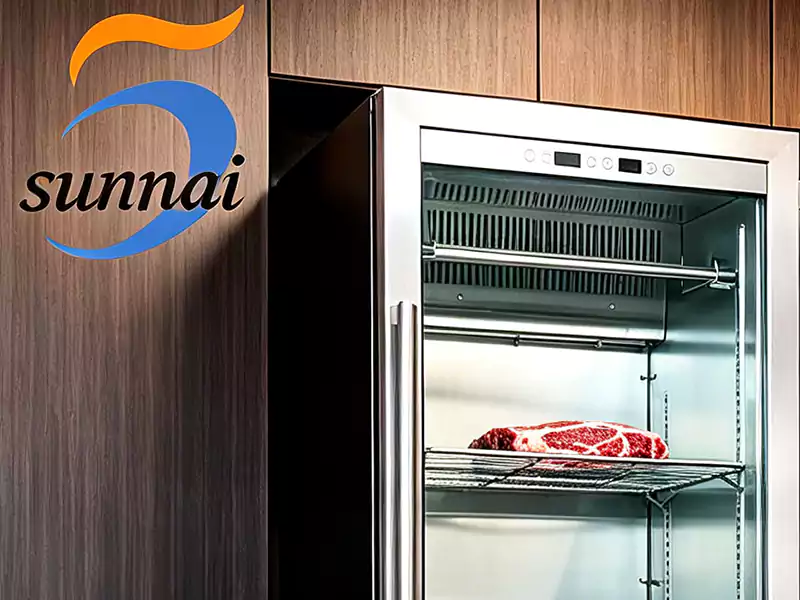
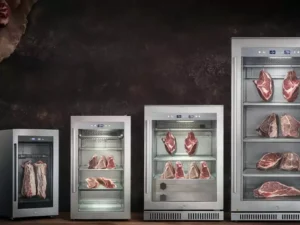
Sunnai currently offers commercial dry aging refrigerator models in multiple capacities, giving restaurants, butcher shops, steakhouses and other professional businesses different options based on space and expected aging volume.
Based on the Above Summary
So, can you dry age beef in a regular refrigerator?
A standard refrigerator can keep beef refrigerated, but that does not make it a purpose-built dry aging system.
Professional dry aging requires more than cold air. It involves the controlled interaction of temperature, humidity, airflow and time.
That is why a dedicated dry aging refrigerator or commercial dry age fridge is a more appropriate solution for restaurants, steakhouses, butcher shops and other businesses that want a repeatable meat-aging process. Beef industry guidance specifically identifies temperature, humidity, airflow and aging time as the core parameters of dry aging.
For commercial applications, choosing the right equipment is an important first step toward establishing a controlled aging environment.
Looking for a Commercial Dry Age Fridge?
Explore Sunnai’s commercial dry aging refrigerator range, compare available models and choose a configuration suited to your business.



 EN
EN  AR
AR  RU
RU  FR
FR  IT
IT  KO
KO  JA
JA  ES
ES  TH
TH